
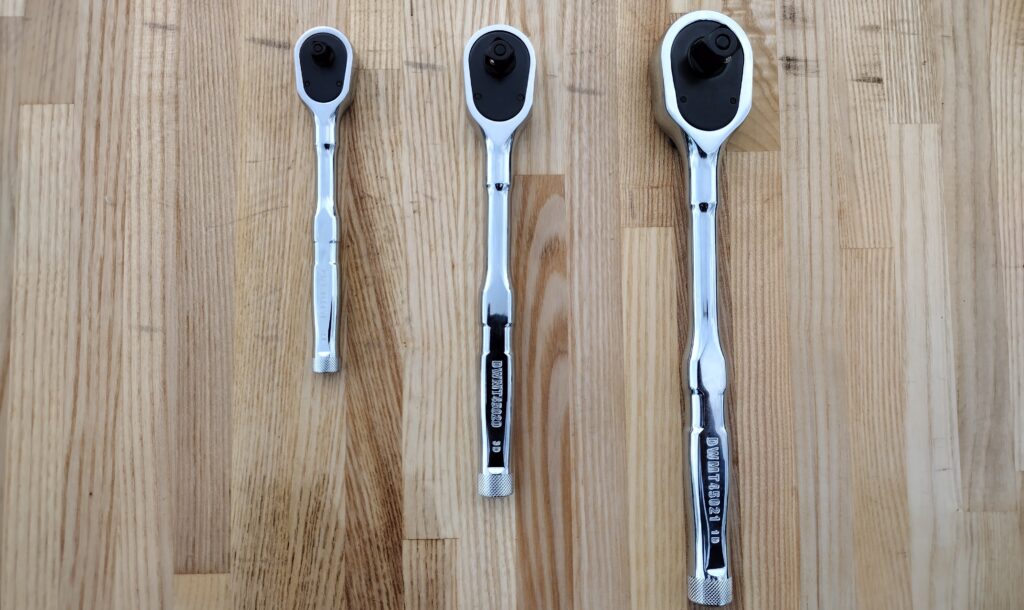
Over the years I’ve accumulated a number of ratchets for a number of different reasons. When a good deal comes around I find it difficult to resist adding to my ratchet repertoire even if it’s not totally necessary. This was the case when I stumbled upon these newly released DeWalt ToughSeries ratchets in early December 2025. The latest DeWalt 144 tooth ToughSeries Ratchets were instantly attractive to me due to their increased tooth count over their previous generation counterparts. Therefore I couldn’t pass up the opportunity to improve my tooling.
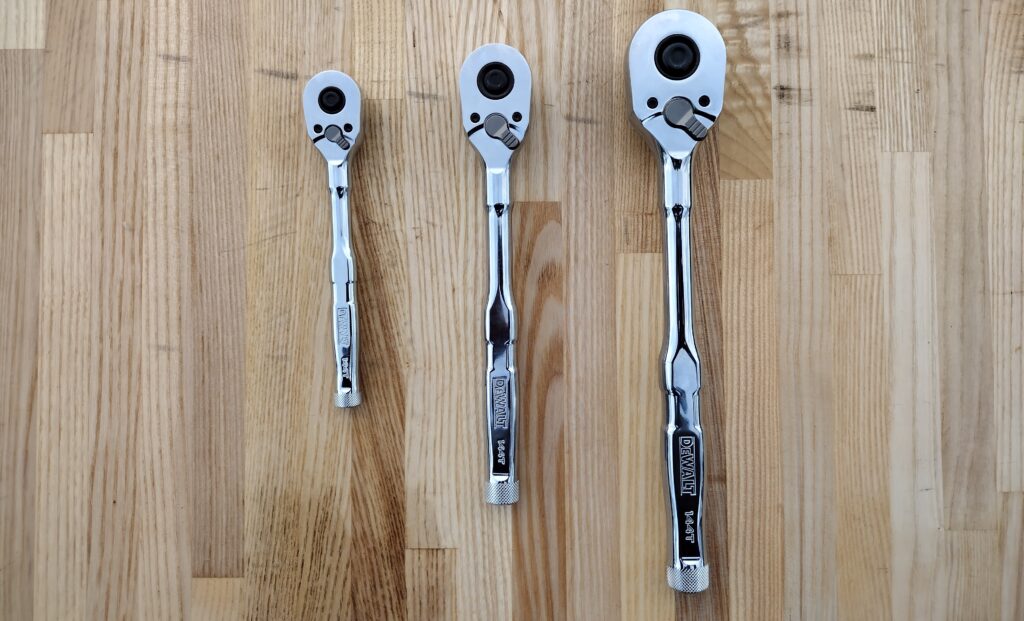
TOUGHSERIES 1/4 in. Drive 144 Tooth Quick Release Ratchet – DWMT45019 -> https://acmetools.pxf.io/RGvQ72
TOUGHSERIES 3/8 in. Drive 144T Quick Release Ratchet – DWMT45020 -> https://acmetools.pxf.io/N9OL7P
TOUGHSERIES 1/2 in. Drive 144T Quick Release Ratchet – DWMT45021 -> https://acmetools.pxf.io/LKb673
Key Characteristics
From an aesthetic standpoint they are really good looking ratchets. Regardless of whether or not we like to admit it, appearance is important in our tool decision tree. The Gun Metal Chrome finish gives the ratchets a sleek look and feel. The pear shaped head is standard across high levelish ratchets. This also helps to accommodate the dual pawl design that helps give each ratchet its 144 tooth qualification. The added weight contributes to the overall balance of each ratchet giving you improved control in confined spaces. Leverage and control are the two highest qualities of the latest generation of ratchets. The 2.5 degree swing arc allows you to conquer detail oriented work much more efficiently than the previous generations 5 degree swing arc.
Specs + Features
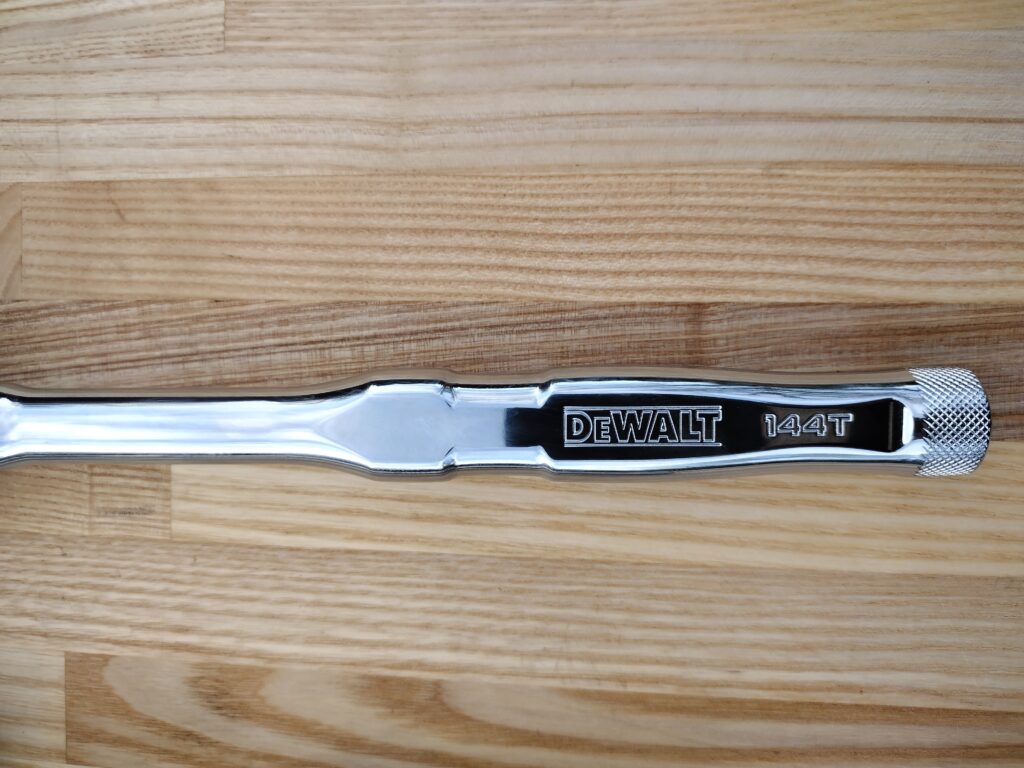
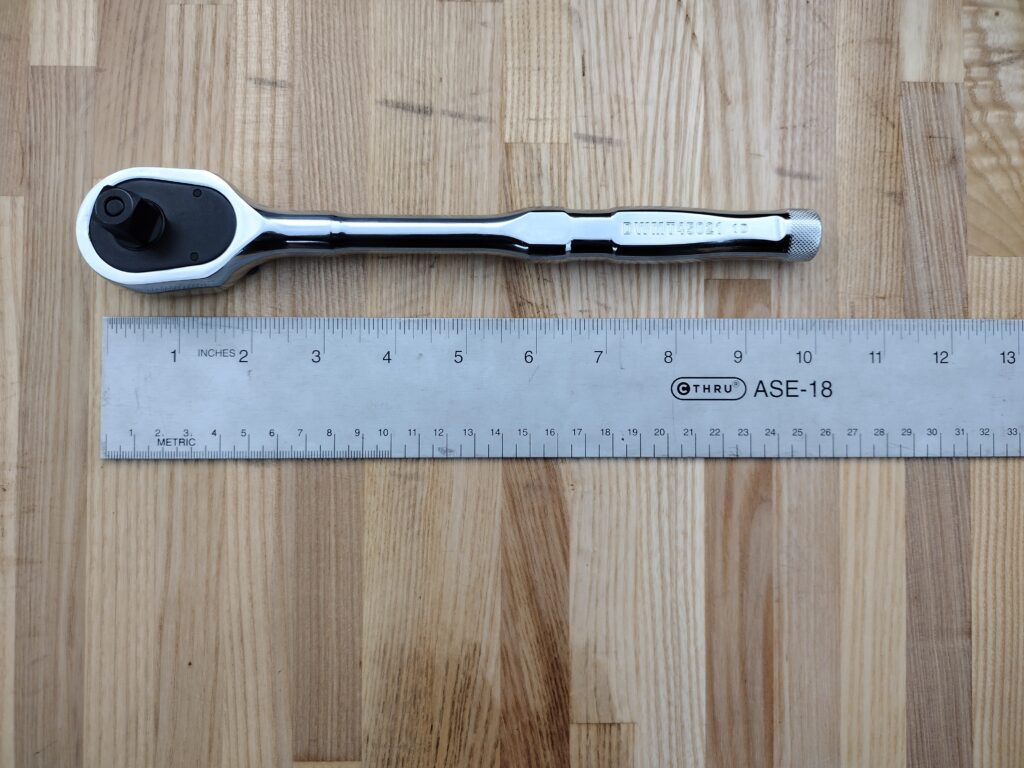
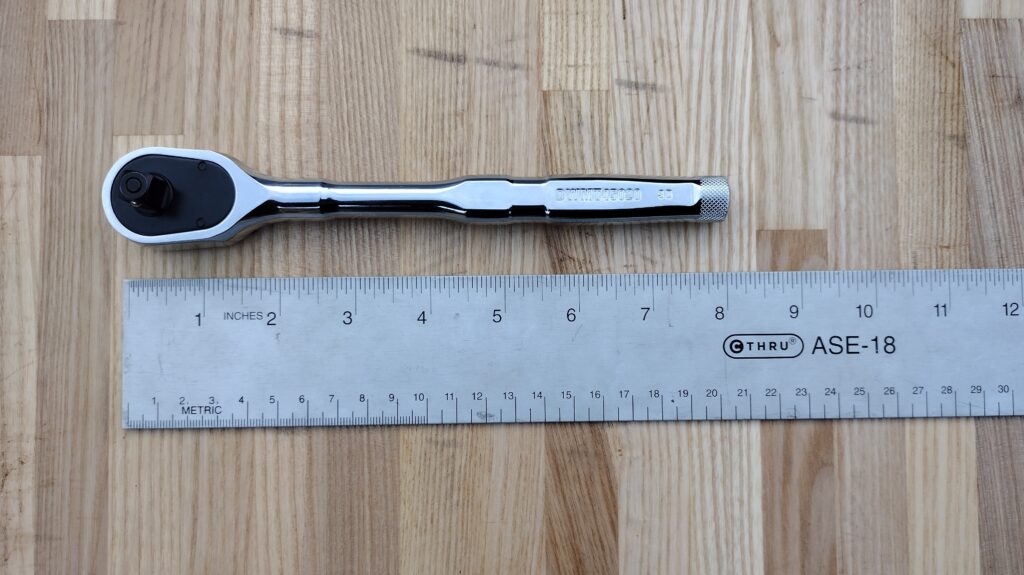
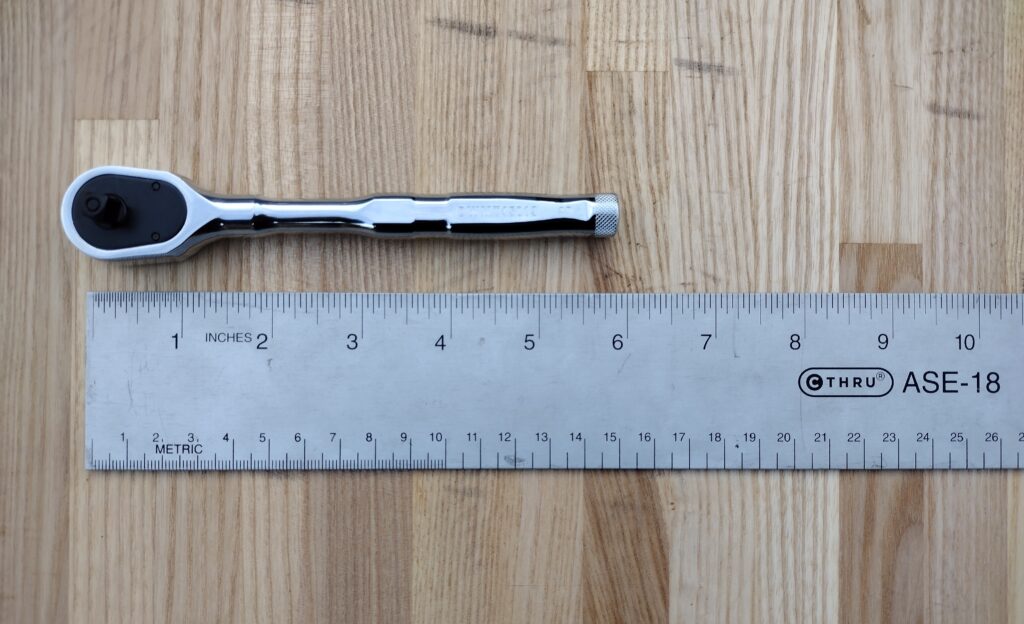
The 144 tooth count provides smooth articulation and it also assists with movement capability especially in confined spaces. A great example are the engine bays of modern vehicles. As the compartments steadily decrease in size the value of accessibility and control grows exponentially. All three of the new generation ratchets are slightly longer than the previous generation. The 1/2 inch ratchet measures at 12.7 inches in total length. The 3/8 inch drive measures 9.9 inches and the 1/4 version clocks in at 8.6 inches.
Common Applications
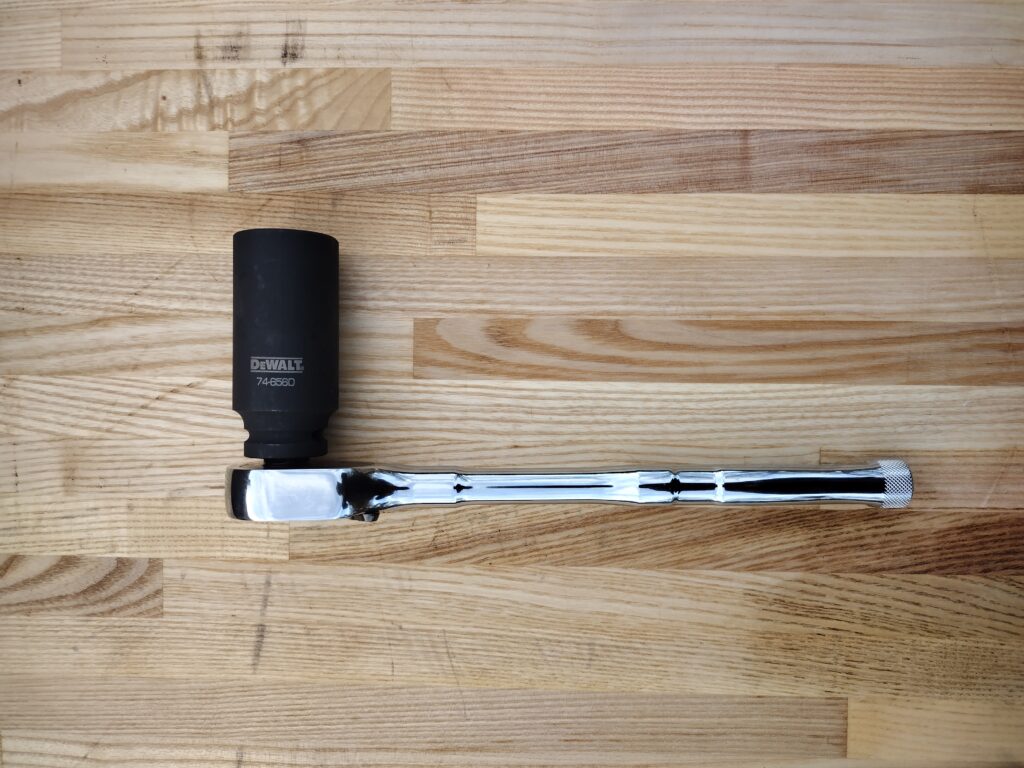
These ratchets seem to be geared specifically towards professional and not-so professional auto mechanics, aerospace technicians, as well as industrial technicians. 1/2 inch drive ratchets come in the clutch during applications such as brake jobs where additional force and leverage are often needed in order to complete the job. 3/8 inch ratchets I find useful for everyday tasks that don’t need a ton of torque. 1/4 inch ratchets I find most suitable in low leverage applications where you want to protect the integrity and the aesthetics of the work piece. Automotive Repair, Fleet Maintenance, Industrial Maintenance and Farm Equipment Maintenance are all common applications that DeWalt has referred to as specific areas of use for these ratchets.
Comparisons
Since DeWalt came around ten plus years ago with their initial mechanics tool offerings the market has gotten undoubtedly saturated with just about every single hand tool manufacturer throwing their own hat into the fold. According to some of DeWalt’s historical positioning it seems as though they are competing with the likes of Crescent, Wera, GearWrench, Tekton and of course Milwaukee. I would call this the Mid-Market area comfortably above Husky, Icon and Craftsman but not near the level of Snap-On or Mac Tools ratchets.
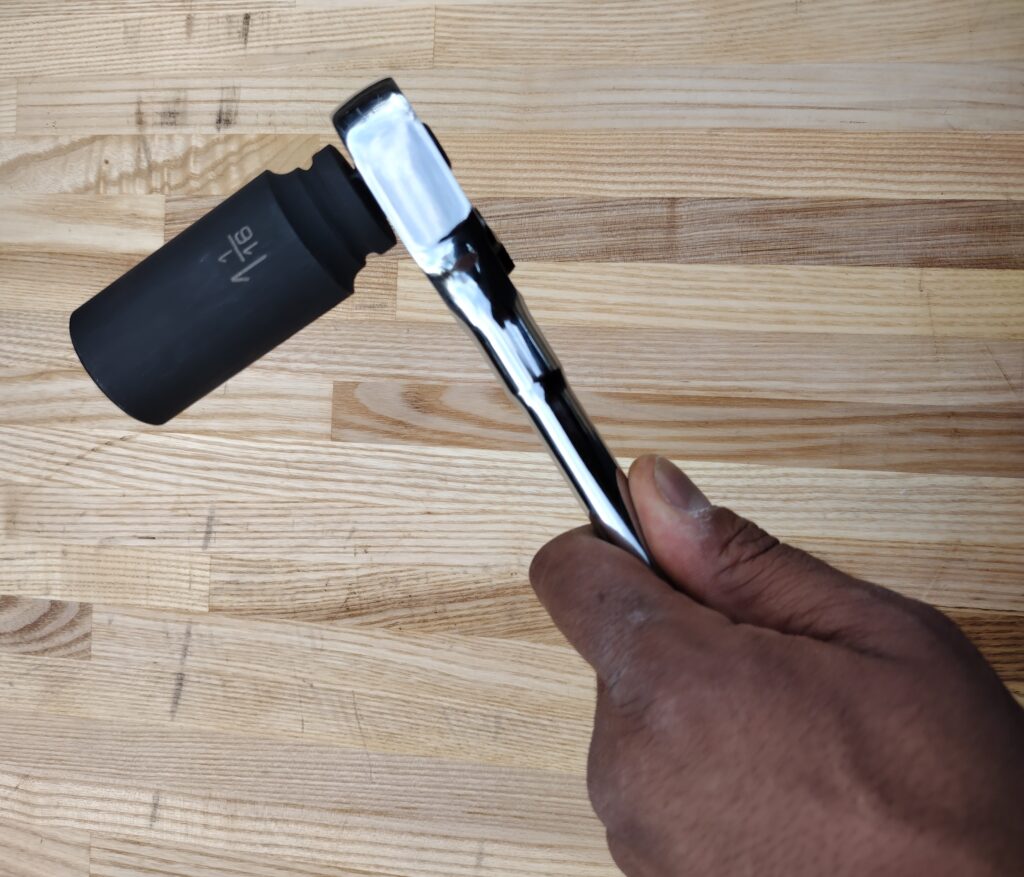
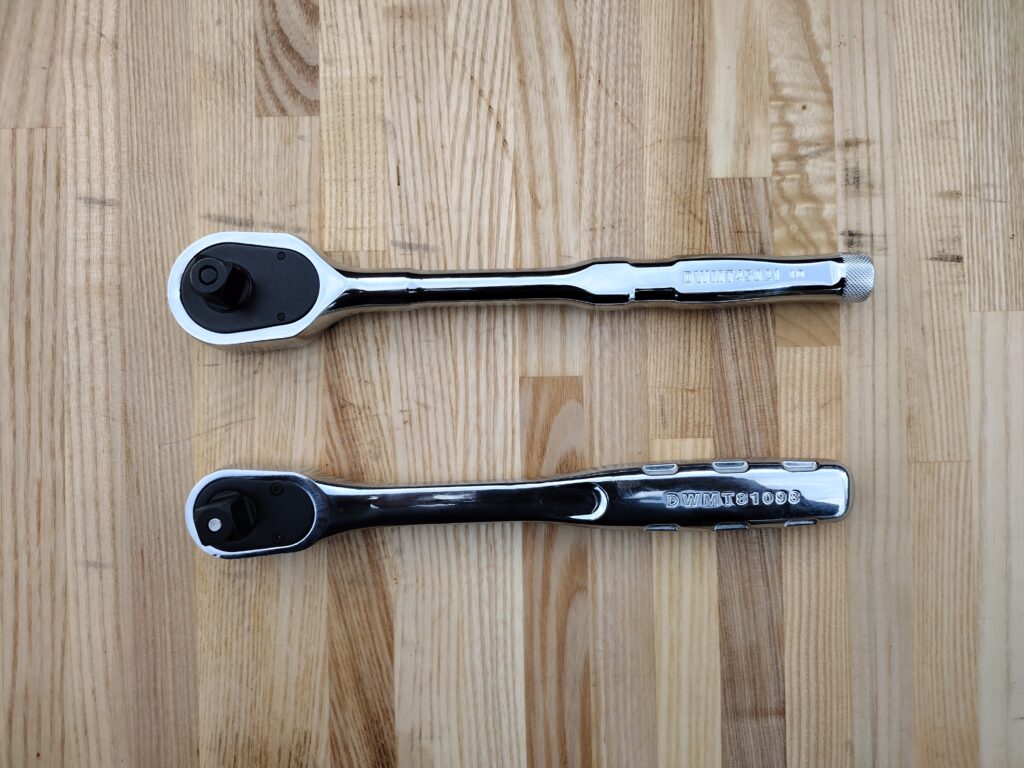
As things have become so crowded one would think that DeWalt and or Stanley Black and Decker would refine their market strategy for all of their different brands more succinctly. Currently, Stanley Black & Decker offers ratchets from Mac, Proto, Blackhawk, Craftsman, Stanley and DeWalt. Clearly when you’ve got that many entries in the same category there is a high likelihood of overlap. This is clearly the case when you set the DeWalt Tough Series ratchets next to the latest Craftsman Overdrive ratchets that were released over the past couple of years. The two sets of ratchets share a striking resemblance with the exception of the tooth count.
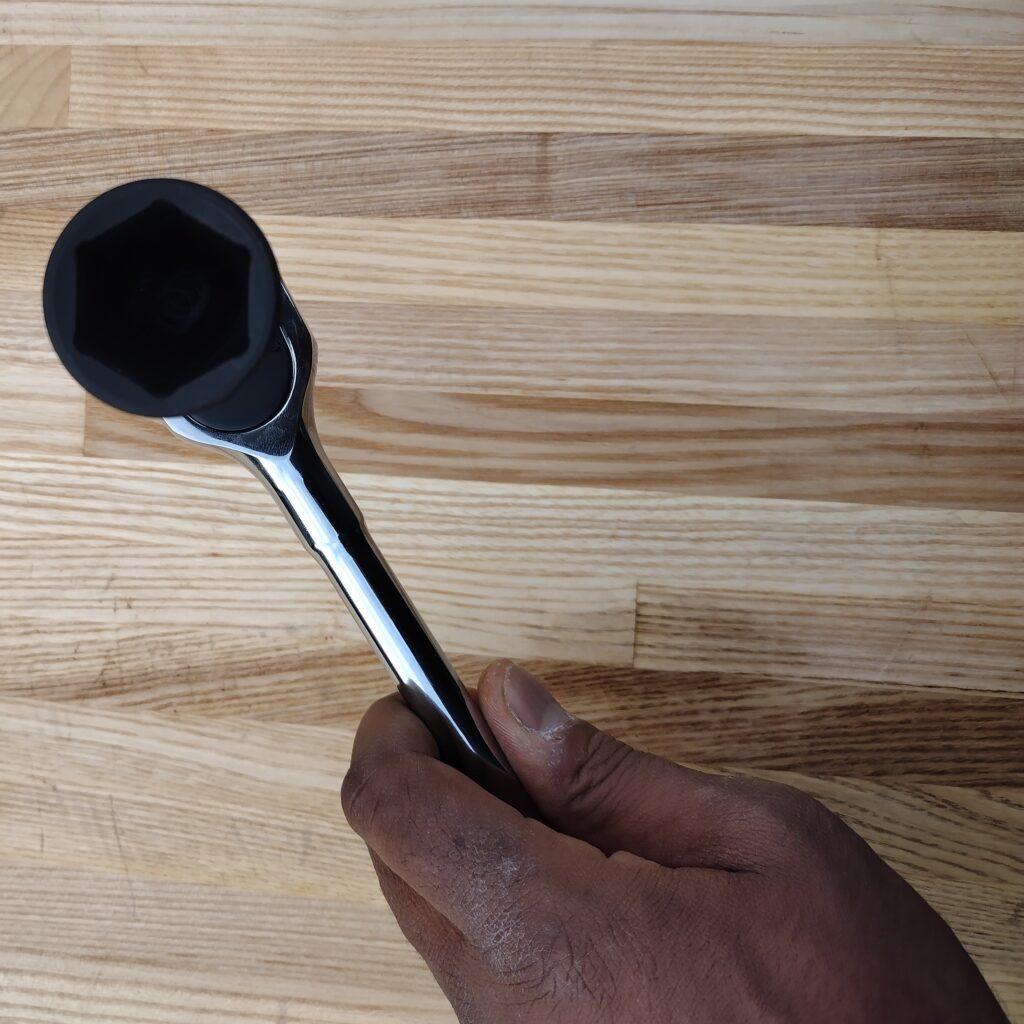
The near identical construct makes me wonder why the Craftsman Ratchets are 180 tooth and the DeWalt Tough Series are only 144. I think it would be worth opening both ratchet heads up in order to take a closer look at what’s going on inside and also understand whether or not they share identical internals. I haven’t picked up the Craftsman counterparts as of yet so maybe down the road we can take a look and compare the internals of each style.
Closing Thoughts
The main thing that I like about the new generation of ratchets is the higher tooth count compared to the previous generation. The big thing that I dislike about the newer ratchets is the smaller handle diameter when compared to the previous generation. The other thing that I dislike is the Craftsman Overdrive ratchets that are out there. In all honesty if I would have paid more attention I’m not certain I would have grabbed the new Tough Series ratchets over the Craftsman Overdrive ratchets. Having found out about the comparables after I’d already purchased the new DeWalt ratchets was slightly disappointing. The ratchets themselves are great but I must say there is a slight damper since I was shooting for the highest tooth count possible.
Leave a Reply